
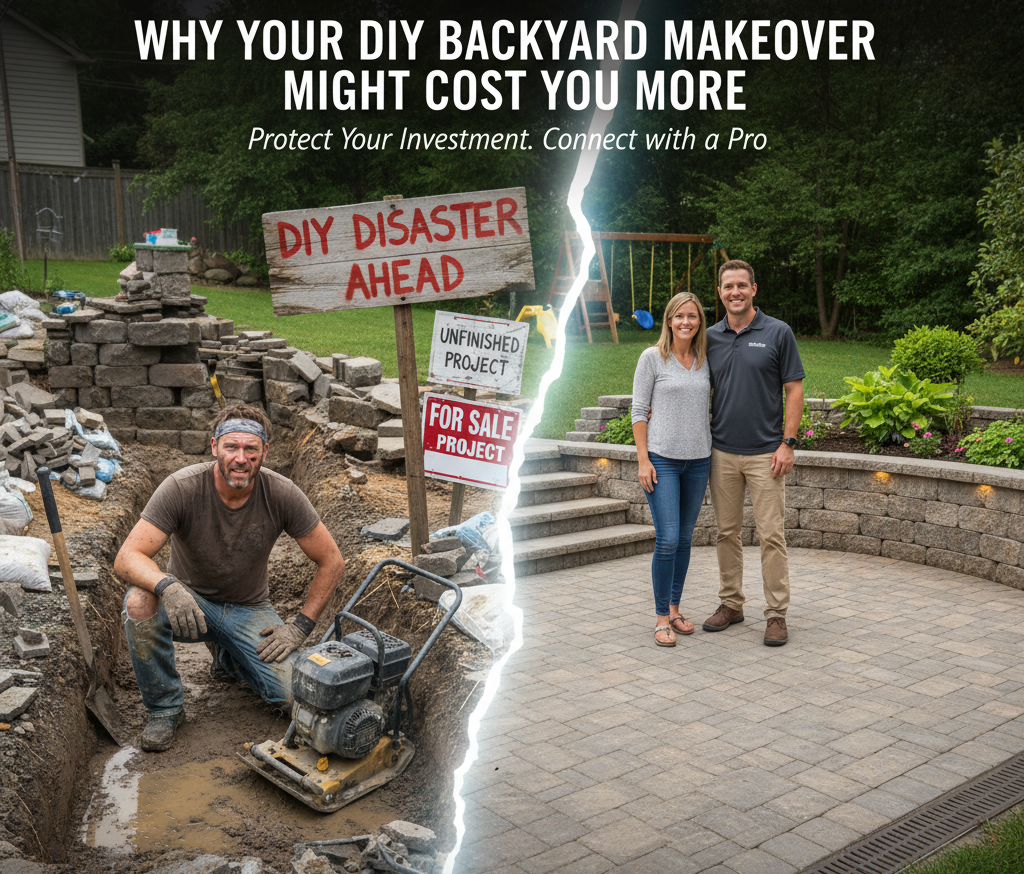

It starts with a vision: the perfect paver patio, an elegant retaining wall, and summer evenings spent enjoying your new backyard oasis. And if you're like most homeowners, one thought follows close behind — I could build this myself and save a fortune. A DIY paver patio promises the satisfaction of doing it with your own hands and the money saved by skipping the pro.
But hardscaping isn't a weekend paint job or a piece of flat-pack furniture. Building a patio or retaining wall that stays level, drains properly, and survives years of freeze-thaw is a real construction project — and the hidden costs of a DIY backyard makeover have a way of erasing every dollar you set out to save. More often than not, doing it yourself ends up costing more, not less.
The Rise of the Ambitious DIYer
Do-it-yourself culture has exploded, fueled by home improvement shows and endless online tutorials that make everything look effortless. What started with simple fixes has morphed into homeowners feeling empowered to take on ambitious outdoor construction. The core misconception has taken root: if you can follow instructions for a bookshelf, you can surely build a paver patio.
This belief, however, overlooks a critical truth that separates simple home tasks from structural hardscaping.
Hardscaping Isn't a Hobby, It's Construction
Many homeowners believe they can achieve professional results and save a significant amount of money with a DIY approach. The internal debate is real: weigh the perceived savings against the unknown complexities.
The reality is that hardscape projects are governed by engineering principles. They require an understanding of soil mechanics, water management, and load distribution that a 10-minute video can’t possibly convey. Without technical know-how and specialized tools, the risk of failure isn't just possible, it's probable.
.png?width=1024&height=1024&name=download%20(1).png)
Your DIY Disaster Playbook: 5 Ways Backyard Projects Go Wrong
Thinking about starting your own project? Here are the most common DIY backyard makeover mistakes that can turn your dream into a disaster.
1. Paver Base Preparation: The #1 DIY Patio Mistake
The Problem: The most critical—and most commonly botched—step is base preparation. Many DIYers underestimate the work involved, failing to excavate to the proper depth (a minimum of 6-8 inches of compacted sub-base is crucial for patios) or skimping on the layers of compacted crushed stone and gravel.
The Consequence: An improper paver base preparation leads directly to failure. Without using a heavy-duty plate compactor to achieve proper density, the base will settle unevenly. The result? Sinking and shifting pavers, unsightly gaps where weeds take over, and a wobbly, unstable surface. This is often the most expensive problem to fix, as it requires a complete tear-out and restart.
2. DIY Paver Patio Drainage Problems (and What They Cost)
The Problem: Water is the number one enemy of hardscaping. DIY projects often fail to account for a proper slope (at least a ¼ inch drop per foot) to direct water away from the home. Homeowners are rarely equipped to understand local runoff patterns or the immense power of hydrostatic pressure building up behind a retaining wall.
The Consequence: The risks of DIY paver patio drainage issues are incredibly high. At best, you get pooling water that creates a slippery, stained mess. At worst, you channel water directly toward your house, leading to erosion, a flooded basement, and potentially catastrophic foundation damage. The cost of these repairs can easily dwarf the original price of a professional installation.
-1.png?width=1457&height=1080&name=Untitled%20design%20(1)-1.png)
3. Why DIY Retaining Walls Fail
The Problem: A retaining wall is an engineered structure designed to hold back thousands of pounds of soil. DIY retaining wall failures are common because of a misunderstanding of the forces at play. Common mistakes include ignoring the regional frost line, failing to install proper drainage behind the wall to relieve hydrostatic pressure, or using the wrong materials.
The Consequence: The results are terrifying: bulging, cracking, and even a complete structural collapse. A failing retaining wall isn’t just an eyesore; it’s a significant safety hazard that can cause property damage and injury. The cost to fix a bad DIY retaining wall is immense, often requiring heavy machinery and professional engineering to correct.
4. Is It Really Cheaper to DIY a Paver Patio? The Hidden Costs
The Problem: The belief that "it's cheaper to DIY a paver patio" often ignores the true cost of the project. Homeowners underestimate the hidden costs of a DIY backyard makeover, from renting professional-grade tools like plate compactors and wet saws to the amount of material wasted on mis-cuts and mistakes.
The Consequence: The initial "savings" evaporate quickly. When you factor in the rental fees, the extra material runs, and the value of your lost weekends, the price creeps closer to a professional quote. Worse, if the project fails, you pay twice: once for the DIY attempt and a second time for a professional to tear it out and do it right.
.png?width=1024&height=1024&name=download%20(6).png)
5. Edge Restraints & Polymeric Sand: The Details DIYers Skip
The Problem: Rushing to the finish line, many DIYers skip critical final steps. They may not install proper edge restraints to keep pavers locked in place or fail to sweep polymeric sand into the joints. This special sand hardens to create a durable, flexible bond that prevents weeds and insect infestations.
The Consequence: Without edge restraints, the perimeter of your patio will shift and spread apart. And if you don't use polymeric sand, you’re creating a perfect home for weeds and anthills, leading to constant maintenance. These omissions result in an amateurish finish that fails to deliver the aesthetic value you worked so hard to achieve.
The Professional Edge: Investing in Peace of Mind
Certified hardscape professionals bring more than muscle — they bring expertise. They own the specialized tools, understand local building codes and freeze-thaw soil conditions, and have the technical knowledge to guarantee structural integrity. A professionally installed patio or retaining wall comes with warranties and the assurance of a job done right the first time, protecting you from the repair bills that quietly make a DIY paver patio cost more than hiring out. Pair that expertise with high-quality, durable materials and you get an outdoor space that adds lasting value to your home.
And as outdoor living evolves — integrated lighting, outdoor kitchens, permeable paver systems — the need for professional skill only grows. These are complex systems, not weekend projects.
So don't gamble with your home's value or your family's safety. The DIY spirit is admirable, but the risks, hidden costs, and potential for catastrophic failure in hardscaping are simply too high. The smartest investment isn't the cheapest weekend, it's the patio you only pay for once.
Ready to build your backyard the right way? Connect with a certified hardscape professional near you who can bring your vision to life.

